Acer Nitro 14 Review: Real User Experience After 3 Months
Introduction
I've been using the Acer Nitro 14 as my primary laptop for work, light content creation, and gaming for the last three months. I bought a configuration with a 14-inch 144Hz IPS display, 16GB of RAM, a 1TB NVMe SSD, and an NVIDIA RTX 4050-class mobile GPU (my exact SKU may vary by region). I wanted something compact and relatively affordable that could handle modern games at 1080p while still being portable enough to toss in my backpack on commute days. What I found was a surprisingly capable little machine with a few trade-offs that owners should know about.
What I hoped for and why I chose the Nitro 14
Coming from bulkier 15–17 inch gaming laptops, I wanted a smaller footprint without losing too much performance. The Nitro 14 promised a good balance: a high-refresh 14" panel, an efficient H-series CPU, discrete graphics for gaming, and a price that didn’t make my wallet cry. I also wanted a laptop that wouldn’t scream “gamer” with gaudy lighting and plastic gaudiness—something with a subtle design I could use in meetings.
Design and build quality
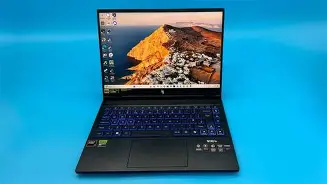
In my experience, the Nitro 14 leans heavily on practicality. The chassis is mostly polycarbonate with a matte finish that resists fingerprints better than glossy alternatives. It feels lighter than typical 15-inch gaming laptops, which is what I wanted, and the hinge is solid with minimal wobble. One thing I noticed immediately was the slightly boxy look: it’s not thin-and-sleek like an ultrabook, but that’s not a complaint—it's clearly prioritizing cooling and durability.
That said, the lid and deck flex a bit under pressure. For day-to-day typing and carrying it around, that wasn’t an issue, but if you’re heavy-handed the keyboard deck will give a little. The laptop includes a modest amount of ventilation along the rear and sides; the intake vents are on the bottom, so a firm surface or a cooling pad helps airflow during heavy gaming.
Display — clarity, color, and real-world use
The 14-inch 144Hz IPS panel is probably the most pleasantly surprising part of this laptop. Out of the box, colors are decently accurate for casual photo editing and media consumption—nothing professional-grade, but better than I expected for the price. Brightness in my unit sat around the mid 300-nits range in typical settings, which was enough for indoor use and the occasional cafe session. Viewing angles are good, and the 144Hz refresh rate makes UI interactions and fast-paced games feel much smoother compared to standard 60Hz panels.
One limitation I noticed: the panel is not particularly color-critical. If you do color-accurate photo or video work, you’ll want to calibrate or use an external monitor. There's also a slight graininess at the very low brightness settings, which bothered me during evening writing sessions until I found a balance that worked.
Performance — everyday tasks and gaming
In my daily workload—browser tabs, Slack, Teams calls, light Lightroom edits, and a handful of virtual machines—the Nitro 14 handled everything smoothly. 16GB of RAM felt adequate for my multitasking needs, though I occasionally hit swap when running several heavy apps and a VM simultaneously. If you plan to keep this laptop for multiple years or do heavy content creation, upgrading to 32GB is worth considering.
For gaming, the RTX 4050-class GPU in my unit delivered solid 1080p performance. In competitive titles like Valorant and CS2 I consistently saw 200+ FPS on high settings, which made the 144Hz panel very enjoyable. Heavier AAA games like Cyberpunk-style titles or newer open-world games averaged between 45–90 FPS at high settings depending on the game and frame-rate features (DLSS or similar when available made a noticeable difference). I was surprised by how capable this small machine was for modern gaming at 1080p.
Load times were snappy thanks to the NVMe SSD. Install times and game updates felt faster than older SATA SSD-equipped laptops I've used.
Thermals and noise
Thermal behavior is where the Nitro 14 shows its design compromises. Under sustained gaming, CPU and GPU temperatures climbed into the high 80s Celsius on the hottest days, and I noticed the fans ramping up to a loud level. I don't have lab-grade decibel meters, but subjective listening puts the fans at "roommates-will-notice" volume during demanding sessions. For shorter sessions or esports titles, the noise level is much more tolerable.
Find top-rated Laptops & Computers products at great prices.
See Deals →Some thermal throttling occurred during extended benchmarks. What I found helpful was toggling performance profiles in Acer's NitroSense app—switching to "Turbo" pushed performance but added more noise and heat; "Balanced" was good for daily gaming without frying my lap. If you plan on long, marathon gaming sessions, a cooling pad or external fan helps both temperatures and sustained frame rates.
Keyboard, trackpad, and webcam
The keyboard is one of the things I appreciated most. The key travel is satisfying for a laptop this size—firm and responsive with a small amount of bounce. The RGB lighting is present but subtle; I left it on the red/soft white preset most of the time. The trackpad is accurate and smooth for everyday navigation; I did occasionally find myself relying on a mouse for gaming and precision editing, but that’s to be expected.
The webcam is average. It’s usable for video calls but not flattering in low light. The microphone did an acceptable job for meetings, though I preferred using a headset for clarity and noise isolation during long calls.
Speakers and audio
Speakers on the Nitro 14 are fine for casual media: clear mids and highs, decent volume, but the bass is predictably lacking. For music or movies, I used headphones or Bluetooth speakers for a fuller sound. I appreciated the inclusion of a headphone jack for low-latency audio when gaming.
Ports and connectivity
In my unit, the port selection covered all my essentials: multiple USB-A ports, a USB-C port (with DisplayPort alt-mode and power delivery on my SKU), an HDMI output that handled external monitors well, and a 3.5mm audio jack. I used the USB-C port for a single-cable laptop-to-monitor setup on my desk—charging and display out worked reliably. There’s also a gigabit ethernet port which I found convenient for LAN sessions or stable downloads. Your exact port mix may differ by model, so double-check the SKU when you buy.
Battery life — real world results
Battery life is one of the areas that showed the Nitro 14’s trade-offs. For light productivity—web browsing, email, and document editing—I got about 6–7 hours consistently when I dialed brightness down and used the "Balanced" mode. If I pushed the laptop for gaming or content creation, battery life dropped quickly to under 90 minutes, which is expected for a discrete-GPU laptop of this power.
I appreciated that the laptop supports reasonably fast charging, and the charger is small enough to carry, but this isn’t a long-haul work-from-the-airport machine. Plan to be near power for gaming or heavy workloads.
Software and maintenance
Acer ships the Nitro 14 with NitroSense and a handful of other utilities. NitroSense is useful for switching performance modes, monitoring temps, and tweaking fan profiles. There were a few preinstalled apps I didn't need, and I removed them during initial setup. Upgrading storage and memory was straightforward: a maintenance panel gives access to the SSD and a free RAM slot (in my unit one slot was occupied), making upgrades possible without complicated teardown.
Pros & Cons
- Pros:
- Compact and relatively lightweight for a gaming-capable laptop
- High-refresh 144Hz 14" display feels smooth and is great for competitive gaming
- Strong 1080p gaming performance for its class
- Good keyboard feel and usable trackpad
- Reasonable port selection including USB-C with display out
- Upgradable SSD and RAM make future-proofing easier
- Cons:
- Fans can get loud under sustained load
- Thermals get warm, and there is some performance throttling during long sessions
- Display is not color-critical out of the box (not ideal for pro content creators)
- Battery life is mediocre for demanding tasks
- Build flex is noticeable if you press on the keyboard deck
How it stacks up — quick comparison
| Model | Display | GPU (class) | Real-world Battery | Weight | Positioning |
|---|---|---|---|---|---|
| Acer Nitro 14 (my unit) | 14" 144Hz IPS | RTX 4050-class | 6–7 hours (light use) | ~1.9–2.1 kg | Affordable compact gaming laptop |
| ASUS ROG Zephyrus G14 | 14" up to 120–144Hz (high-quality) | Up to RTX 4060/4070-class | 8–10 hours (light use, depending on config) | ~1.6–1.8 kg | Premium compact performance, pricier |
| Lenovo Legion Slim 5 | 15" 120–165Hz (larger) | Up to RTX 4060/4070-class | 7–9 hours (light use) | ~1.9–2.2 kg | Balanced performance with cleaner design |
| Apple MacBook Air (M2) | 13–13.6" 60–120Hz Retina | Integrated Apple GPU | 12–18 hours (light use) | ~1.2–1.4 kg | Excellent battery & efficiency, not for high-end gaming |
Buying guide — what to consider before you buy
In my experience, choosing the right Nitro 14 configuration depends on how you plan to use it. Here are the practical things I recommend you consider.
Shop the latest Laptops & Computers picks on Amazon.
Browse Now →1. Decide how much gaming performance you need
If you mostly play esports or older titles, the mid-tier GPU in the Nitro 14 will be more than enough. If you want sustained high frame rates in modern AAA games with ray tracing, consider stepping up the GPU class or looking at slightly larger laptops with better cooling.
2. RAM and storage — plan for upgrades
Buy the minimum storage and add an NVMe if you can save money that way; the Nitro 14 allows for an upgrade and it's straightforward. I recommend 16GB of RAM as a baseline, 32GB if you frequently edit video, run many browser tabs, or keep VMs running.
3. Think about thermals and noise
If you game in a quiet environment or care about fan noise, set expectations: compact machines push more heat into smaller spaces and the fans respond accordingly. Consider getting a cooling pad or looking for models with stronger thermal solutions if noise is a deal-breaker.
4. Screen quality vs. portability
The Nitro 14 balances size and refresh rate well, but if color accuracy or maximum brightness matters more than portability, a larger or higher-tier panel might be necessary.
5. Warranty and service
Check Acer’s warranty options in your region. I ended up purchasing a one-year extension because I plan to use the laptop heavily and wanted peace of mind.
6. Accessories that made my life easier
- USB-C docking station for connecting an external monitor and peripherals at my desk
- External SSD for backups and large media projects
- Cooling pad for long gaming sessions to keep temps and noise down
Final thoughts and conclusion
After three months with the Acer Nitro 14, what stands out most is how well it balances portability and gaming capability. In my experience it’s a genuinely practical choice for someone who wants a compact gaming laptop that also functions competently as a daily driver. The keyboard and display are pleasant to use, and the performance-per-dollar is one of the reasons I bought it.
However, you're trading something for that compactness: noise and thermals under sustained load, and battery life during heavy use. If you can accept louder fans during intensive gaming, don’t need perfect color accuracy, and plan to upgrade RAM in the future if needed, the Nitro 14 is a very useful machine. If you need the quietest laptop possible or want professional-level color accuracy, you’ll want to look elsewhere.
For me, the Nitro 14 hit the sweet spot between performance, size, and price. I’ve enjoyed using it for work and play, and it’s become the one machine I reach for when I want something portable but still capable of serious gaming sessions.