All In One Review: Real User Experience After 3 Months
Introduction: Why I Finally Made the Switch
I still remember the day I decided to clear off my desk. For years, my workspace was a chaotic graveyard of tangled cables, bulky towers, and a monitor that seemed to take up more space than my actual keyboard. As someone who spends roughly ten hours a day in front of a screen—split between professional spreadsheets and personal creative projects—the clutter was starting to feel like mental weight. I had researched the "All In One" desktop category for a long time, always skeptical about whether a single unit could actually replace the raw power and modularity of a traditional PC setup. Three months ago, I finally took the plunge and bought the All In One, determined to see if the streamlined aesthetic was worth the potential trade-offs in performance and upgradability.
My goal was simple: I wanted a machine that looked like a piece of furniture but worked like a workstation. I didn't want to spend twenty minutes every time I cleaned my room untangling dust-covered wires from behind a heavy metal box. I wanted a "plug-and-play" experience that didn't feel like a compromise. Now that I’ve lived with this machine through a full quarterly work cycle, several late-night design sessions, and dozens of video calls, I feel like I finally have a grasp on what it means to live the "AIO life." In this review, I’m going to share the gritty details of my daily usage, the things that made me smile, and the few specific quirks that occasionally make me miss my old tower.
The First Month: The Honeymoon Phase and Setup
The first thing I noticed when I unboxed the All In One was the weight. There is a certain density to a well-made machine where the computer is integrated directly behind the glass. Setting it up was, quite frankly, the easiest experience I’ve ever had with a desktop. I plugged in exactly one power cable, synced the wireless peripherals, and I was at my desktop screen in under five minutes. For someone used to matching HDMI ports to GPU slots and finding the right USB headers for webcams, this felt like magic.
During the first few weeks, I was mostly enamored with the display. Because everything is built into the monitor housing, the screen quality is the centerpiece of the experience. I found myself reaching out to touch the bezels just because they were so much thinner than my old standalone monitor. The color accuracy right out of the box was impressive. As I worked on photo edits for my personal blog, I noticed that the reds and deep blues had a vibrancy that my previous TN-panel monitor simply couldn't replicate. I wasn't just working; I felt like I was looking into a window.
However, the honeymoon phase also brought my first realization about the port placement. To keep the front looking sleek, the designers tucked most of the ports around the back or on the underside. In the first week, I found myself "fishing" with my thumb behind the screen to find a USB slot for a quick file transfer from an old thumb drive. It’s a minor annoyance, but it was the first sign that form sometimes dictates function in the All In One world. Eventually, I learned to just leave a small hub connected, but it did slightly ruin the "zero cable" look I was going for.
Month Two: Daily Performance and Thermal Reality
Performance is where most tech enthusiasts get nervous about All In One systems. I was worried about thermal throttling—basically, the computer slowing down because it gets too hot in that tiny space behind the screen. After sixty days of daily use, I can say that for 90% of what I do, this hasn't been an issue. When I’m running twenty Chrome tabs, a Slack window, a Spotify stream, and a heavy Excel file, the machine is silent and snappy. I noticed that the internal SSD is incredibly fast; booting up takes literally seconds, which is a far cry from the "click and go make coffee" routine of my old mechanical-drive PC.
I did push the machine during a particularly heavy weekend when I was rendering a 4K video for a family reunion. This is where I found the limit. About ten minutes into the render, I heard the fans kick in. It’s not a loud, mechanical grind, but more of a sophisticated "whoosh." I noticed the back of the casing felt quite warm to the touch. The render finished successfully, and it didn't crash, but it was a reminder that this isn't a dedicated server. If you are doing hardcore 3D rendering or heavy video editing all day every day, the lack of airflow in such a thin chassis is something you have to respect. For my needs—writing, moderate design, and heavy browsing—it’s more than enough, but it verified my suspicion that thermal management is the biggest hurdle for these compact systems.
Shop the latest Electronics picks on Amazon.
Browse Now →What I truly appreciated during month two was the integrated audio. I’ve always used cheap desktop speakers that sat on either side of my monitor, adding two more wires and two more "things" to my desk. The All In One’s downward-firing speakers are surprisingly deep. While they won't replace a high-end home theater system, I found that for watching Netflix after work or jumping onto Zoom calls, the clarity was significantly better than any laptop or standard monitor speaker I’ve used. It furthered that feeling of "oneness" that makes this product category so appealing.
Month Three: Living with the Limitations
Now that I’m three months in, the novelty has worn off and I’m looking at the All In One as a tool rather than a toy. The biggest realization I’ve had is about the "fixed" nature of the hardware. Last week, I thought about adding more RAM. In a traditional PC, I’d just pop the side panel off and click in a new stick. Here, it’s a bit more of a surgical operation—or in some cases, impossible depending on the specific configuration. I’ve had to be more disciplined with my disk space and my background processes because I know I can't just "upgrade my way out" of a problem three years from now.
One thing that bothered me toward the end of the third month was the height adjustment—or lack thereof. Most All In Ones have a Tilt-only stand. My old monitor was on an adjustable arm. I found that I had to buy a small wooden riser to get the screen to eye level so I wasn't constantly looking slightly downward. It’s a small ergonomic detail, but when the computer *is* the monitor, you lose some of that physical flexibility. You can't just swap the stand for a different one easily. I’ve adjusted now, but it’s something I think every potential buyer should consider: your desk height matters more with an All In One than it does with a modular setup.
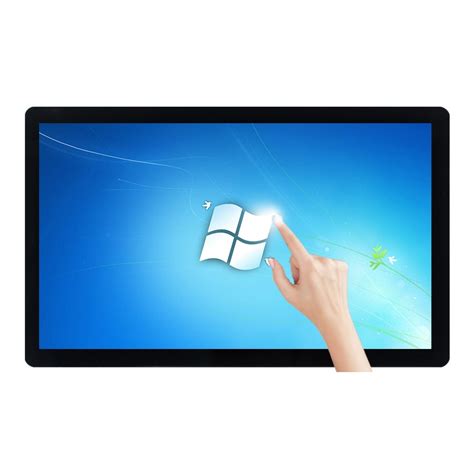
On the positive side, I’ve noticed a significant change in my productivity. Because the setup is so clean, I find it easier to sit down and focus. There’s no blinking lights from a tower under the desk, no clicking of a loud external hard drive, just the screen. It’s created a much more "Zen" working environment. I also noticed that the built-in webcam is significantly better than the clip-on one I used to use; the way it handles low light in my home office (which doesn't have much natural light) was a pleasant surprise. My colleagues actually asked if I had bought new lighting for my calls.
Pros and Cons: A Honest Breakdown
- Pro: Clean Aesthetic - The reduction in cables is genuinely life-changing for people who hate visual clutter. One power cord is all you need.
- Pro: Excellent Screen Quality - Because the manufacturer controls the entire stack, the integration between the graphics chip and the panel is usually optimized for great color and brightness.
- Pro: Instant "Out-of-the-Box" Utility - No building, no cable management, no driver hunting for basic peripherals. It just works from the moment you plug it in.
- Pro: High-Quality Integrated Peripherals - The webcams and microphones in modern All In Ones are often superior to mid-range external options because they are tuned for that specific chassis.
- Con: Limited Upgradability - What you buy today is essentially what you are stuck with. Changing the CPU or GPU is usually out of the question for the average user.
- Con: Thermal Management - Small spaces mean heat builds up faster. It’s not meant for sustained, 100% CPU loads for hours on end.
- Con: Port Accessibility - Reaching behind the screen every time you want to plug in a headphones jack or a USB drive can become a tedious daily chore.
- Con: Ergonomic Rigidity - Fixed stands mean you might need to adjust your furniture or buy a riser to get the perfect viewing angle.
The Comparison: All In One vs. Traditional Desktop
To help visualize why someone would choose this over a standard tower, I’ve put together a table based on my observations over the last 90 days. This compares the All In One experience directly against the custom-built tower I used previously.
| Feature | All In One Experience | Traditional Tower Experience |
|---|---|---|
| Footprint | Minimal; fits on small desks or kitchen counters. | Large; requires space for tower, monitor, and cables. |
| Setup Time | Less than 5 minutes. | 30–60 minutes (including cable routing). |
| Sound Profile | Mostly silent; quiet "whoosh" under heavy load. | Variable; often has a constant hum from multiple fans. |
| Repairability | Difficult; usually requires professional service. | High; individual parts can be replaced easily. |
| External clutter | Almost zero; 1 power cable. | High; HDMI, Power, USB, Audio, and Mouse cables. |
Buying Guide: Is an All In One Right for You?
After three months of "living the dream," I’ve realized that this machine isn't for everyone, but it’s perfect for a specific type of person. If you are trying to decide if you should make the switch, here are the questions I think you should ask yourself based on my experience.
1. What is your primary use case?
In my experience, if you are a student, a remote office worker, or a casual creative who does photo editing and light video work, the All In One is fantastic. If you are a competitive gamer who needs 240Hz refresh rates or a professional animator, you will likely find the thermal limitations and fixed hardware frustrating within the first month.
Looking for the best Electronics deals on Amazon?
Shop Amazon →2. How much do you value your desk space?
I was surprised by how much more "available" my brain felt when I didn't have a giant box sitting under my feet. If you live in a small apartment or have a desk in a multi-use room (like a living room or bedroom), the aesthetic value of an All In One cannot be overstated. It looks like "decor" rather than "equipment."
3. Are you okay with a 3–5 year lifecycle?
Unlike my old PC, which I kept for seven years by swapping parts, I’ve accepted that I will likely replace this entire unit in about four or five years. Because I can't easily upgrade the internals, the software will eventually outpace the hardware. If you prefer to "buy once and upgrade forever," stick to a tower. If you prefer a fresh, high-quality experience every few years, the All In One is the way to go.
4. Check the "Hidden" Specs
When I was shopping, I almost ignored the webcam and speaker specs, thinking I’d just use my old ones. Don't do that. The whole point of an All In One is to *not* use those old things. Make sure the built-in camera is at least 1080p and the microphones have noise-canceling features. My experience was significantly improved because I didn't have to clutter my desk with an external mic.
Three-Month Verdict: The Conclusion
Overall, my journey with the All In One has been one of simplification. I went into this fearing that I would feel "trapped" by the lack of modularity. What I found was that the convenience and the quality of the integrated experience outweighed my need for tinkering. I spend less time worrying about my computer and more time actually using it. I noticed that I’m more likely to jump into a creative project because "getting started" feels less like an event when the machine is right there, sleek and ready.
I did have those moments of frustration—like when I had to flip the whole unit around just to find an SD card slot—but those are outweighed by the sheer beauty of the display and the silence of the operation. I’ve become a convert to the "clean desk" philosophy. If you are someone who feels overwhelmed by the complexity of modern tech, or if you simply want a high-performance computer that doesn't scream "I’m a computer," the All In One is a mature, capable, and surprisingly powerful solution. Just make sure you get enough RAM and storage upfront, because once it’s on your desk, that beautiful glass screen is there to stay.